
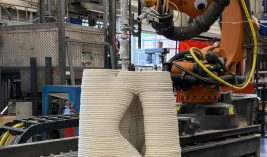
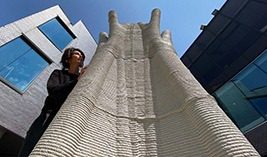
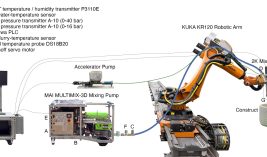
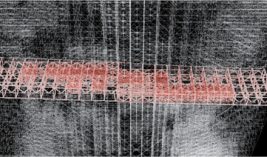
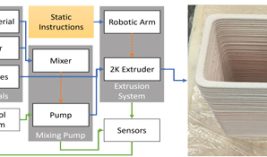


2026-AI_summit_AI-Enabled-Multimodal-Learning-and-Decision-Making-for-Robotic-3D-Concrete-Printing

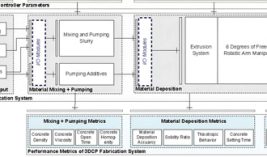
AI-Enabled Multimodal Learning and Decision Making for Robotic 3D Concrete Printing

Lin, Y., Aghaei Meibodi, M., & Barton, K.

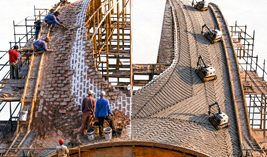
2026-AI_summit_AI-Driven-Print-Path-Generation-for-Scaffold-Free-Robotic-3D-Concrete-Printing-of-Vaulted-Structures

AI-Driven Print-Path Generation for Scaffold-Free Robotic 3D Concrete Printing of Vaulted Structures

Kamhawi, A., Aghaei Meibodi, M., & Capecelatro, J.

2026 Digital Concrete Functionally Graded Lattice Walls

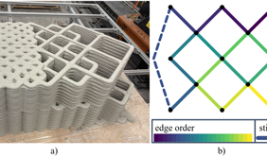
Functionally graded lattice wallsvia continuous Eulerian toolpaths for robotic 3D concrete printing

Watson, C. J., Barton, K. L., & Aghaei Meibodi, M.

2026_Digital-Concrete-2026_Time-Aware-Robot-Motion-Planning-for-Non-Planar-3D-Concrete-Printing

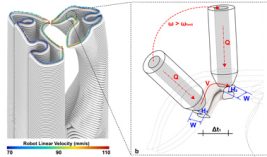
Time-aware robot motion planning for non-planar 3D concrete printing

Lin, Y., Aghaei Meibodi, M., & Barton, K.

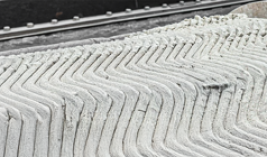
2026_Acadia_From-Tile-to-Filament_-A-Cohesive-Lamination-Method-for-Scaffold-Free-3D-Concrete-Printed-Vaults

From Tile to Filament: A Cohesive Lamination Method for Scaffold-Free 3D Concrete Printed Vaults

Kamhawi, A., Aghaei Meibodi, M., & Capecelatro, J.

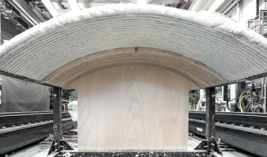
VPP-Laminated-Vault-Scaffold-Free-3D-Concrete-Printing-Vaulted-Structures-Zig-Zag-Lamination

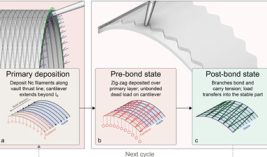
Laminated Vault: Scaffold-free 3D concreteprinting of vaulted structures via zig-zag lamination

Kamhawi, A., & Aghaei Meibodi, M.

2026_CMAME_Modeling-Buildability-in-3D-Concrete-Printing_-A-Discontinuous-Galerkin-Method-with-Cohesive-Interfaces

Modeling Buildability in 3DConcrete Printing

A Discontinuous Galerkin Method with Cohesive Interfaces

Kamhawi, A., Aghaei Meibodi, M., & Capecelatro, J.

02(2)

TopoBeam

Data-Informed Feedforward Control for Robotic 3D Concrete Printing of Topology Optimized Building Elements

Lin, Y., Aghaei Meibodi, M., & Barton, K.

diagrams-02

Non-planar slicing for high-genus surfaces with non-coplanar interfaces

Aghaei Meibodi, M. , Kamhawi, A. , Foroughi Dehnavi, A., & Li, Y.

2025-RoboSym-Automating-Robotic-Construction-and-Extrusion-System--Through-Control-System-Applications

Automating robotic construction and extrusion systems through control system applications ii

Watson, C., Barton, K., & Aghaei Meibodi, M.

2025-RoboSym-Automating-Robotic-Construction-and-Extrusion-System--Through-Control-System-Applications2

Automating robotic construction and extrusion systems through control system applications iii

Watson, C., Barton, K., & Aghaei Meibodi, M.

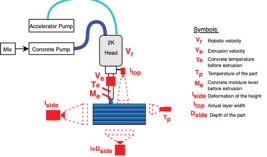
2025-MMRI_Towards-intelligent-3DCP_-Data-collection-from-deposition-and-construct

Towards intelligent 3DCP: Data collection from deposition and construct

Lin, Y., Aghaei Meibodi, M., & Barton, K.

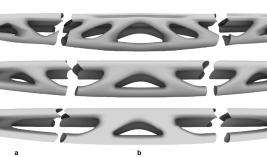
Towards-Lightweight-Structure

Towards Lightweight Structure:

Coupling Topology Optimization with Non-planar 3D Concrete Printing

Lin, Y., Bayramvand, A., & Aghaei Meibodi, M.

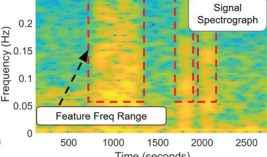
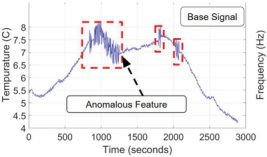
Sensor_integration

A framework for process anomaly detection in 3D concrete printing

Kamhawi, A., Lin, Y., Watson, C., Barton, K., & Aghaei Meibodi, M.

Functionally-graded-wall-showcasing-the-spatial-toolpaths-and-the-cellular-density_W640

Spatial Additive Manufacturing Functionally-graded periodic lattice internal structures

Voltl, C., Aghaei Meibodi, M., & McGee, W.

2024-Exibits-of-Excellents-Final-Automating-Robotic-Construction-and-Extrusion-System--Through-Control-System-Applications

Automating robotic construction and extrusion systems through control system applications i

Watson, C., Barton, K., & Aghaei Meibodi, M.

2025_ACADIA_PhDWorkshop_Voltl_02

Spatial additive manufactured functionally graded periodic lattice internal structures

Voltl, C., Aghaei Meibodi, M., & McGee, W.

2025-MMRI_-Robotic-3D-concrete-printing-of-materially-optimized-building-parts-mini

Robotic 3D concrete printing of materially optimized building parts

Lin, Y., & Aghaei Meibodi, M.

2024_EAAE-ARCC_Multi-Robotic-3D-Printing-Wood-Based-Slurry-on-Construction-Scale

Multi-robotic 3D printing wood-based slurry on construction scale

Kamhawi, A., Varadharajan, T., Khan, M. D., & Aghaei Meibodi, M.

2024_Hybrid-Approaches-Towards-3D-Concrete-Printing-for-Lightweight-Reinforced-Concrete-Structures

Hybrid approaches towards 3D concrete printing for lightweight reinforced concrete structures

Aghaei Meibodi, M., Lin, Y., & Chen, H.

2024 Collaborative multi robotic 3D printing

Collaborative multi-robotic 3Dprinting with slurry-based materials for construction applications

Kamhawi, A., & Aghaei Meibodi, M.

Artboard 9@3x-100

Vertical Wetland: Robotic 3D Printing of Urban Vertical Green Systems for Biodiversity

Gao, J., Goyal, A., Li, Y., Yan, B., & Aghaei Meibodi, M.

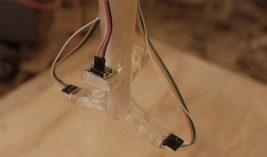
Integrated-Sensing-Printhead

Integrated Sensing Printhead:

In-Line Data Collection for Non-Planar 3D Concrete Printing

Lin, Y., & Aghaei Meibodi, M.

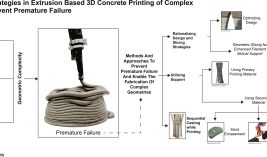
1-s2.0-S0926580524005041-ga1_lrg

Techniques and strategies in extrusion based 3D concrete printing of complex components to prevent premature failure

Kamhawi, A., & Aghaei Meibodi, M.

Waste-Free-Production

Waste-Free Production of Ultra-thin Concrete Panels via Robotic 3D Printing and CNC Dynamic Bed Device

Kamhawi, A., Brown, J., Fahmy, A., & Aghaei Meibodi, M.

Publications in DART Laboratory

Digital Architecture Research and Technologies (DART) is a research laboratory within the Taubman College of Architecture and Urban Planning, University of Michigan, founded in 2019 by Prof. Dr. Mania Aghaei Meibodi.  DART research streams focus on developing novel computational design, robotic and 3D printing construction technologies to enable creating lightweight struuctures with sustainable architecture and zero-waste construction. 

We are constantly looking into addressing pressing matters in the field of architecture, engineering, and construction (AEC).  The innovations are tailored to real-world construction constraints (such as speed, cost, and scale) and advance to address environmental and socio-economic challenges such as high CO₂ emission, excess waste, material scarcity, lack of skilled labor, housing shortages, and high energy use in buildings. We particularly look into how we can (1) reduce volume of material in structures by developing design and construction methods, (2) enable efficient construction by developing future smart manufacturing methods, (3) enhance design and fabrication through artificial intelligence and computational methods that optimize structures for performance and sustainability.

DART’s research sits at the intersection of architecture, engineering, computer science, robotics, materials science, and mathematics. Through cross-disciplinary collaborations and industry partnerships, the laboratory advances optimized structures, sustainable architecture, and zero-waste construction.